
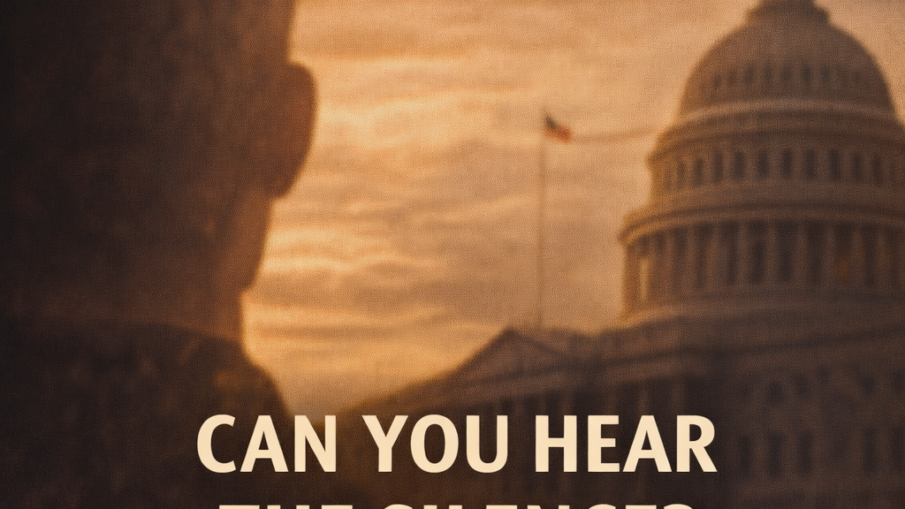
Yesterday I found myself in a conversation that has been echoing in my heart ever since. A friend—someone who doesn’t attend my church—reached out with a question that was honest, curious, and a little heavy.
They wrote:
“Hi Gayle, Since you are a Pastor, I know you speak out against what’s going on in DC. My question is why aren’t more pastors speaking out? Are they afraid of offending members, do they sign some kind of contract to not to get involved, politics? I’d love to hear your opinion. Thanks.”
It’s not the first time I’ve been asked some version of this, but it felt especially urgent this time. People are paying attention. And they’re noticing not just who is speaking—but who isn’t.
My honest response was this: I believe many United Methodist pastors do recognize what’s happening in our country. Silence does not always mean agreement. For some, silence comes from fear—fear of offending members, fear of losing people, fear of conflict. Others sincerely believe pastors shouldn’t speak to anything labeled “political,” worrying it crosses a line they were taught never to step over.
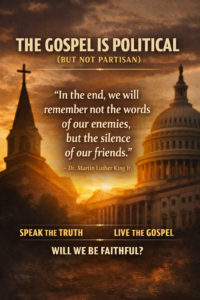
But here’s where I land, clearly and without apology: the gospel is political—but it is not partisan.
The gospel speaks to power, justice, how the poor are treated, who is welcomed, and who is pushed aside. It speaks to love of neighbor and resistance to systems that harm and dehumanize. When one political movement strays far from those gospel values—when it becomes an instrument of oppression—it becomes difficult for faithfulness not to sound partisan, even when it isn’t.
This moment also reminds me of the words of Dr. Martin Luther King Jr., who said,
“In the end, we will remember not the words of our enemies, but the silence of our friends.”
That truth cuts deep—especially in the church.
We teach children who we are and what matters not just by what we say, but by what we avoid. They watch how adults respond—or don’t—to injustice. Silence forms conscience just as surely as speech. As Christians, we are called to emulate Jesus, not comfort or safety or institutional preservation.
Jesus spoke when silence would have been easier. He confronted power when it was risky. He chose love even when it came at a cost.
So to my fellow pastors: our congregations and our communities are listening.
They hear us in our words.
And they hear us just as clearly in our silence.
The question before us is not whether this moment is political.
The question is whether we will be faithful.


Leave a Reply