
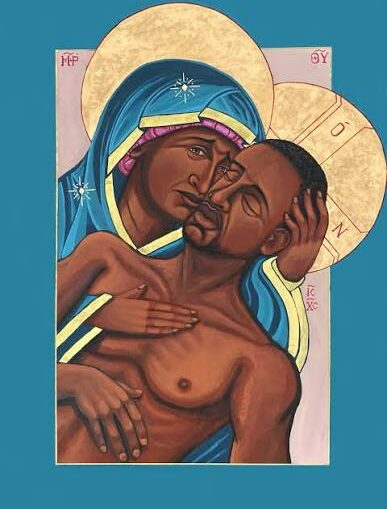
Every July 22, the Church remembers Mary Magdalene.
In 2016, Pope Francis did something remarkable. He elevated her liturgical memorial to a Feast—the same rank given to the male apostles—and formally recognized what the Church had known from its earliest centuries: Mary Magdalene is apostola apostolorum—the Apostle to the Apostles.
That wasn’t creating something new. It was recovering something ancient.
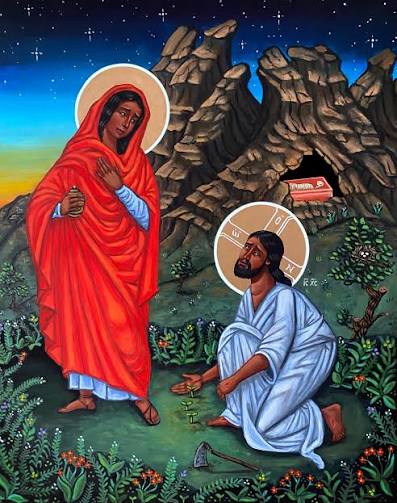
Mary Magdalene appears in all four Gospels. That alone should make us pause. She is present at the cross when many others have fled. She watches where Jesus is buried. She returns before dawn to the tomb. And in John’s Gospel, she becomes the first person to encounter the risen Christ. Jesus entrusts her with the first Easter sermon: “Go to my brothers and say to them…” (John 20:17). She goes and announces, “I have seen the Lord.”
The first preacher of the Resurrection was a woman.
For centuries, however, Mary’s story became tangled with traditions that Scripture itself never tells. She was identified as a repentant prostitute—a claim that has echoed through Christian history despite having no biblical basis. The Gospels tell us that Jesus healed her of seven demons (Luke 8:2). They tell us she became one of the women who traveled with Jesus and supported his ministry. They tell us she remained faithful through the crucifixion and became the first witness of Easter morning. They never identify her as a sex worker.
That misunderstanding has often obscured something far more beautiful.
Mary Magdalene wasn’t defined by her past. She was defined by her calling.
Recent scholarship has encouraged the Church to look again. Diana Butler Bass has highlighted emerging textual work suggesting that Mary Magdalene may have occupied an even more central place in the earliest Christian memory than many of us were taught. While scholars continue to debate the details, the larger point remains compelling: the early Jesus movement included women not on its margins but at its heart. Women were disciples. Women financed the ministry. Women remained faithful at the cross. Women were entrusted with proclaiming resurrection.
Meggan Watterson, in Mary Magdalene Revealed, invites readers to rediscover Mary not primarily as a symbol of repentance but as a disciple whose life embodied profound spiritual wisdom and courageous love. Whether or not one agrees with every historical conclusion Watterson draws, her central invitation is an important one: to recover the voice of a woman whose witness has too often been diminished.
And Scripture itself supports that recovery.
Mary Magdalene belongs in Jesus’ inner circle.
Think about it.
Jesus could have appeared first to Peter. Or John. Or James. Instead, he appears to Mary. In a world where a woman’s testimony carried little legal weight, Jesus entrusts the greatest news in history to a woman. The Resurrection begins not in the halls of power but in a garden, with tears, recognition, and a voice calling someone’s name.
“Mary.”
Everything changes when Jesus speaks her name.
This should not surprise us. Throughout the Gospels, Jesus consistently invites women into places others denied them. Mary of Bethany sits at his feet as a disciple. The Samaritan woman becomes an evangelist to her village. The women travel with him and financially sustain his ministry. Martha proclaims one of the New Testament’s great confessions of faith. And Mary Magdalene becomes the first herald of Easter.
This isn’t an exception.
It’s a pattern.
The Kingdom of God has always been larger than the boundaries human culture tries to draw.
For those of us in the Church today, Mary Magdalene’s feast is more than an opportunity to correct a historical misunderstanding. It is an invitation to remember that God continually calls unexpected people to proclaim extraordinary good news.
The Church does not lose when women lead.
The Church becomes more fully itself.
Every time a woman preaches, teaches, pastors, nurtures, prophesies, or bears witness to Christ, she walks in the footsteps of Mary Magdalene. Every time someone whose voice has been dismissed speaks resurrection into a grieving world, Easter happens all over again.
Perhaps that is why Pope Francis elevated her feast. The Vatican decree noted that the Church is called to reflect more deeply on “the dignity of women” and on the mission of evangelization. Mary Magdalene stands at the intersection of both. She reminds us that proclaiming the Gospel has never belonged to a select few. It belongs to everyone whom the risen Christ sends.
 So today, let us honor Mary Magdalene.
Not the woman history imagined.
But the disciple Scripture remembers.
The faithful follower who stayed when others fled.
The first witness to the empty tomb.
The first preacher of Easter morning.
The Apostle to the Apostles.
And may we, like Mary, have the courage to hear Christ call our name, to recognize the risen Lord, and to go into the world proclaiming with our lives and our voices:
“I have seen the Lord.”


Leave a Reply