
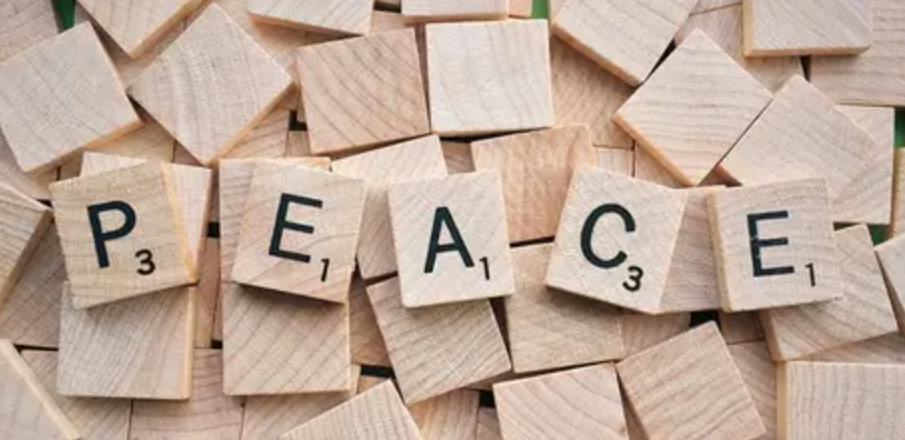
Peace
It’s a word we Christians use a lot. We pray for it. We sing about it. We pass it to one another in worship. We put it on Christmas cards and church signs. We talk about the peace of Christ as though it were something we could simply wrap ourselves in when the world gets uncomfortable.
And yet, I’m not sure we’ve always understood what we’re asking for.
Because biblical peace is not simply the absence of conflict. It is not keeping everyone happy, avoiding difficult conversations, or pretending injustice doesn’t exist. Biblical peace requires justice. And that makes peacemaking a whole lot harder than simply being nice.
In Matthew 5:9, Jesus says, “Blessed are the peacemakers, for they will be called children of God.”
Notice that Jesus doesn’t say blessed are the peacekeepers. He doesn’t bless those who avoid conflict at all costs. He blesses the peacemakers. And there is a difference.
Keeping the peace can mean maintaining the status quo. It can mean asking the oppressed to remain quiet so the comfortable don’t have to feel uncomfortable. It can mean looking away when people are suffering because acknowledging their suffering might create tension. Making peace, on the other hand, requires us to confront the things that destroy it.
The Hebrew concept of shalom, often translated as peace, is much richer than the absence of war. It speaks of wholeness, well-being, right relationships, and a world where people can flourish. Shalom is not simply a world where nobody is fighting. It is a world where people are not being crushed by systems of oppression, where human dignity is honored, and where justice is more than an aspiration.
That’s the kind of peace Jesus calls us to make.
The prophet Micah offers one of the most beautiful visions of peace in all of scripture: “He will judge between many peoples and will settle disputes for strong nations far and wide. They will beat their swords into plowshares and their spears into pruning hooks” (Micah 4:3).
I love that image. Weapons of destruction transformed into tools that cultivate life. Swords become farming equipment. Spears become instruments for growing food. What was once used to destroy life becomes something that sustains it.
But notice what comes before the transformation. Judgment. The settling of disputes. The establishment of justice.
Peace doesn’t emerge because everyone simply agrees to stop talking about their disagreements. It comes when wrongs are addressed, when power is held accountable, and when the instruments of violence are transformed into instruments of life.
And frankly, I think we’ve lost sight of that.
We live in a world where those who wage war often claim to be pursuing peace. Where powerful nations justify violence in the name of security. Where the suffering of innocent people becomes collateral damage in political arguments. And where calling attention to that suffering is sometimes treated as more offensive than the suffering itself.
That’s not the peace Micah imagined. And I don’t believe it’s the peace Jesus blessed.
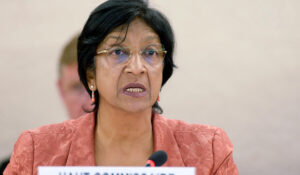
So this morning, when I learned that the 2026 Nobel Peace Prize had been awarded to Navi Pillay, I found myself feeling something I haven’t felt nearly enough lately.
Hope.
Pillay, a South African jurist and longtime human rights advocate, has spent much of her life working for international justice and the rule of law. From challenging apartheid in South Africa to serving on international tribunals addressing atrocities in Rwanda and elsewhere, to her work as the United Nations High Commissioner for Human Rights, she has insisted that human dignity matters and that those responsible for grave human rights violations should be held accountable.
More recently, she chaired a United Nations commission that concluded Israel had committed genocide in Gaza, a finding Israeli leaders reject. Her commission also condemned the war crimes committed by Hamas during the October 7, 2023, attacks. Her work has insisted that the protection of human rights cannot depend on which government, nation, or political movement we happen to support.
And I have to tell you, knowing that human rights still matter is important to me.
In a world where human dignity too often seems negotiable, where suffering is dismissed or justified depending on who is responsible, and where international law sometimes seems to matter only when it’s convenient, I need to know that there are still people willing to stand up and say, No. Human rights are not optional.
Not for some people. Not just for our allies. Not just for people who look like us, worship like us, or live within our borders. For everyone.
And knowing that this work is still valued, still recognized, and still worth fighting for gives me hope. Because if we believe every human being is created IMAGO DEI, in the image of God, then human rights aren’t merely a political concern. They’re a theological one.
The doctrine of the Imago Dei, that every human being bears the image of God, is not something we can selectively apply. We don’t get to decide that God’s image is more present in people who share our nationality, religion, politics, or worldview. We don’t get to declare some people sacred and others expendable.
Either every human being bears the image of God, or we’ve turned that foundational theological claim into something that serves our own preferences.
And I worry that we’ve become far too comfortable doing exactly that.
One of the things that troubles me about our current political and religious climate is how often we confuse peace with silence. We want people to stop protesting. We want uncomfortable conversations to end. We want people to be less angry, less disruptive, less confrontational. And sometimes those desires are understandable. Conflict is exhausting. I don’t know many people who aren’t weary of the division and hostility that seem to dominate our world.
But here’s the problem. If people are being oppressed, asking them to be quiet does not create peace. If civilians are being killed, demanding that people stop talking about it does not create peace. If human rights are being violated, refusing to name those violations does not create peace.
It creates silence. And silence can be very comfortable for those who aren’t suffering.
I think about the prophets, who were rarely popular with the people in power. Amos demanded that justice roll down like waters and righteousness like an ever-flowing stream. Isaiah challenged empty religious practices that ignored oppression. Micah called God’s people to do justice, love kindness, and walk humbly with God. These weren’t calls to maintain a pleasant atmosphere. They were calls to transformation.
And Jesus stands firmly in that prophetic tradition. The same Jesus who blessed peacemakers also confronted religious hypocrisy, challenged systems that excluded people, and overturned tables in the Temple. Jesus wasn’t afraid of disturbing the peace when the peace being maintained was unjust.
Hebrews 12:14 tells us, “Make every effort to live in peace with everyone and to be holy; without holiness no one will see the Lord.”
With everyone.
That’s the part we Christians sometimes struggle with. Not just people who agree with us. Not just people who share our theology, nationality, or politics. Everyone.
And pursuing peace with everyone does not mean pretending everyone is equally responsible for every conflict. Nor does it mean abandoning accountability in the name of reconciliation. Forgiveness and accountability are not opposites. Justice and mercy are not enemies. And loving our neighbors does not require us to excuse the harm they cause.
In fact, sometimes love requires us to tell the truth, especially when the truth is uncomfortable.
We cannot claim to love our neighbors while ignoring the violence done to them. We cannot proclaim that every person bears the image of God and then decide that some lives matter less because of where they were born. We cannot proclaim peace on Sunday morning while remaining indifferent to the suffering of our neighbors the rest of the week.
And perhaps most importantly, we cannot confuse loyalty to a nation, a political party, or a leader with faithfulness to God. Those things are not interchangeable, no matter how often people try to convince us otherwise.
 I don’t imagine that a Nobel Peace Prize will suddenly bring an end to war or genocide. I wish it were that simple. And no recipient of a prize is beyond criticism or disagreement. But I do think recognizing someone whose life’s work has centered on holding power accountable sends an important message.
Peace is not merely negotiated in conference rooms or announced at press conferences. It is built through the difficult, often unpopular work of justice. It is built when people refuse to look away from suffering, when victims are heard, when the powerful are held accountable, and when we insist that the rule of law matters more than the rule of might.
And I think that’s something worth celebrating.
Not because a prize fixes the world, but because it reminds us that there are still people working to make it better. People who believe that human rights matter even when defending them is unpopular. People who understand that peace cannot be built on the suffering of others. People who refuse to accept that violence and oppression are simply the way the world must be.
As a Christian, I believe peacemaking is not optional. It’s not an extracurricular activity for particularly socially conscious Christians. It’s part of our calling.
Jesus didn’t say blessed are the people who talk about peace. He said blessed are the peacemakers. People who make peace. Who work for it. Who risk something for it. Who understand that sometimes creating peace means disturbing the comfortable silence that allows injustice to continue.
And perhaps that’s the question the Church needs to ask itself more often. Are we making peace? Or are we simply trying to keep things peaceful enough that we don’t have to confront what’s wrong?
Because those are not the same thing.
Today, I’m grateful for a reminder that human rights still matter, that justice and peace belong together, and that there are people willing to do the difficult work of holding the powerful accountable.
And I’m reminded that our calling as followers of Jesus is not simply to wish for a more peaceful world. It is to help create one.
Even when it’s uncomfortable. Especially when it’s uncomfortable.
Because peace without justice is not the shalom of God.
So perhaps the invitation for us today is to move beyond praying for peace and actually practice making it. Start somewhere. Learn about a human rights issue you don’t fully understand, especially one that challenges your own assumptions. Listen to someone whose experience is different from yours. Speak up when someone is dehumanized, even when it’s someone you disagree with. Contact your elected representatives and insist that human rights and international law matter. Support organizations doing the difficult work of protecting vulnerable people. And in your own community, look for places where relationships are broken, people are excluded, or injustice has simply become accepted as normal.
And here’s the harder part: Don’t confuse being uncomfortable with being persecuted. Sometimes the discomfort we experience when confronted with injustice is precisely where God is inviting us to grow. We don’t have to solve every conflict or fix every injustice. But we can refuse to be indifferent. We can choose one concrete act of peacemaking this week, and then another next week. Because shalom isn’t something we simply wait for God to deliver. It’s something God invites us to participate in creating.
Today, I’m grateful for a reminder that human rights still matter, that justice and peace belong together, and that there are people willing to do the difficult work of holding the powerful accountable.
And I’m reminded that our calling as followers of Jesus is not simply to wish for a more peaceful world. It is to help create one.
Even when it’s uncomfortable. Especially when it’s uncomfortable.
Because peace without justice is not the shalom of God.
And peacemaking is holy work.
Sources: Nobel Prize Press release https://www.nobelprize.org/prizes/peace/2026/press-release/
Reuters Former ICC judge Navi Pillay wins 2026 Nobel Peace Prize https://www.reuters.com/world/navanethem-navi-pillay-wins-2026-nobel-peace-prize-2026-10-09/


Leave a Reply